
Osborne County Criminal Court Records
A criminal court record is the case-level file kept by the Clerk of the District Court once a criminal prosecution opens. In Osborne County, felony cases and state misdemeanor cases are District Court matters. The case file can include the complaint or information, charge statutes, bond events, counsel appointment, preliminary hearing, arraignment, motions, orders, plea, trial settings, disposition, sentencing, costs, restitution, probation conditions, warrants tied to court noncompliance, and later filings.
The record should not be confused with the arrest event. The arrest or booking side belongs to law enforcement and jail records. The filed charges and court outcome belong to the court case. For the filed accusations and changes to individual counts, use Osborne County arrest records and court charges. For the full range of civil, probate, domestic, traffic, and criminal case records, use Osborne County court records.
The Osborne County Attorney is the local prosecutor for county and state criminal cases.
The County Attorney source matters because prosecution decisions create the filed charges that become part of the criminal court record.
Search Osborne County Criminal Cases
Kansas CaseSearch is the main public online route for Osborne County criminal court records. Search by defendant name or exact case number when known. The public search may show case type, filing date, parties, counsel, court events, charge entries, hearing settings, disposition, and public documents. If the case is sealed, expunged, juvenile, not digitized, or outside public electronic access, the online search may be limited or blank even when a court file exists.
- Open Kansas CaseSearch and accept the public access terms if prompted.
- Search by case number for a known criminal file or by defendant name when the case number is unknown.
- Narrow to Osborne County or the 17th Judicial District if the public search role offers a court filter.
- Open the case and review the docket, charges, hearings, pleadings, journal entries, disposition, and sentencing entries.
- Call the Clerk of the District Court at 785-346-5911 for certified copies, older files, or records not visible online.
A Kansas criminal history check is a different product from a court file. The Kansas criminal history record check portal is used for statewide criminal history searches, while the court case file comes from CaseSearch or the local clerk. Neither path should be treated as a jail custody lookup. For current custody, use Osborne County inmate records and the sheriff or state custody systems.
The Kansas criminal history portal is a separate statewide record-check source.
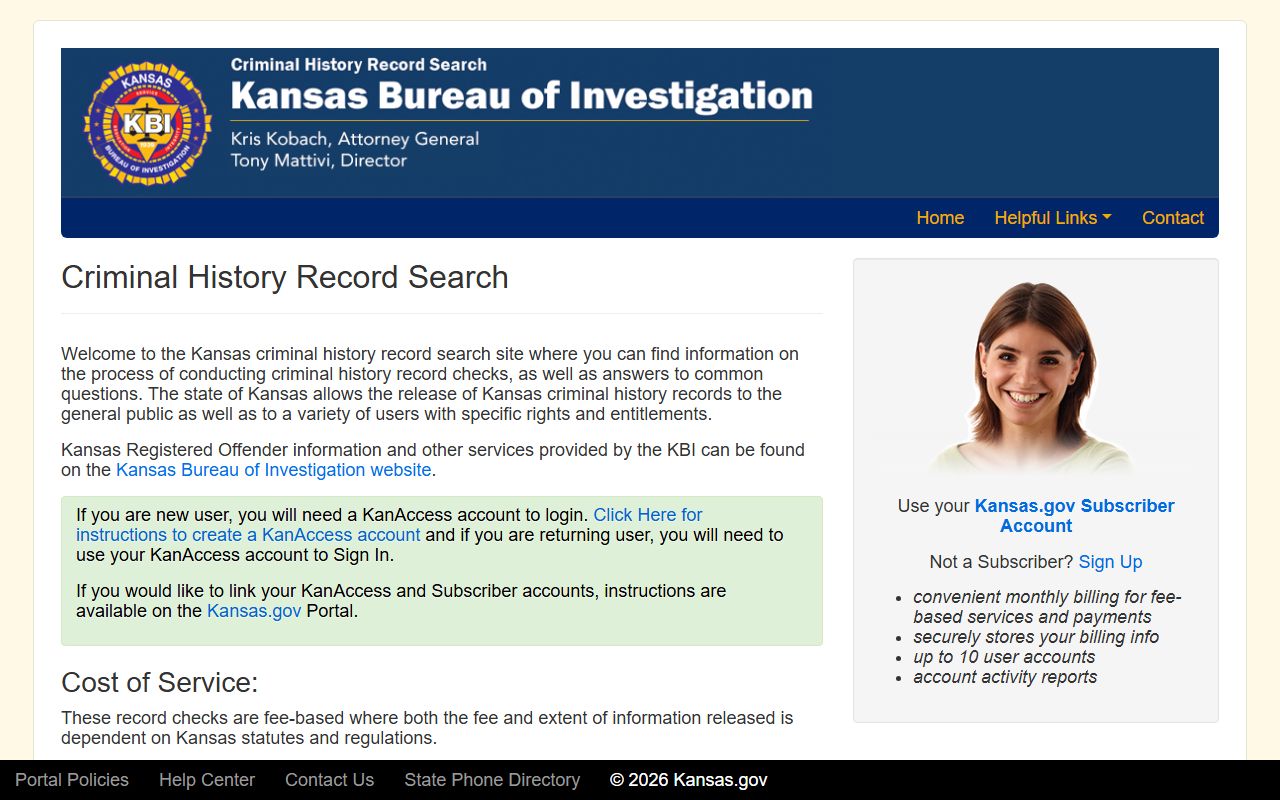
That portal can help with statewide criminal-history questions, but it does not replace the Osborne County District Court case file.
Criminal Case Flow
Criminal court records are easiest to read as a sequence. A charge may start with a complaint or information. The defendant then appears in court, bond or release conditions may be set, counsel may enter, and the case may move through preliminary hearing, arraignment, motions, plea negotiations, trial settings, plea or verdict, disposition, and sentencing. Not every case has every step, and some charges are amended, reduced, or dismissed before final disposition.
Case flow: Charges Filed › First Appearance › Arraignment › Pretrial / Motions › Plea or Trial › Disposition › Sentencing
| Stage | What Happens |
|---|---|
| Charges filed | The County Attorney files a complaint or information alleging one or more offenses. |
| First appearance | The court addresses initial rights, bond, conditions, and next dates. |
| Arraignment | The defendant enters a formal plea to the charges. |
| Pretrial / motions | Parties file requests, address evidence, negotiate, or prepare for hearing or trial. |
| Plea or trial | The case resolves by plea, dismissal, acquittal, or verdict after trial. |
| Sentencing | The court enters sentence, fines, costs, restitution, probation, or other orders when applicable. |
What Criminal Records Show
The criminal court record connects the accusation to the outcome. It should be read count by count. One defendant can have several charges in the same case, and each count can end differently. A dismissed count does not mean the whole case was dismissed. A plea to one count may follow dismissal or amendment of another count. The docket and journal entries must be read together to understand the current status.
| Field | What It Shows |
|---|---|
| Case number | The exact Osborne County District Court criminal case identifier. |
| Defendant | The person charged in the State of Kansas criminal case. |
| Prosecutor | The County Attorney or prosecutor handling the filed case. |
| Charges | The offense names, counts, statutes, severity levels, and current status when public. |
| Bond | Release terms, amount, conditions, or later bond changes. |
| Hearings | First appearance, preliminary hearing, arraignment, review, motion, trial, or sentencing settings. |
| Plea | Guilty, not guilty, no contest, or other plea entry when recorded. |
| Disposition | Dismissed, convicted, acquitted, diverted, amended, or other final outcome by count. |
| Sentence | Jail or prison term, probation, fines, costs, restitution, conditions, or supervision orders. |
| Warrants | Failure-to-appear or court noncompliance events if public and docketed. |
Charges vs. Convictions
A charge is an accusation filed with the court. A conviction is an outcome after a guilty plea, no-contest plea accepted by the court, or guilty verdict. Osborne County criminal court records may show charges that were amended, reduced, dismissed, or resolved differently from the first filing. That is why the docket, charge status, and sentencing entry must be read together.
| Issue | Charge | Conviction |
|---|---|---|
| Stage | Formal accusation after filing. | Final finding or accepted plea. |
| Proof | Based on charging standards and probable cause. | Based on plea, verdict, and court judgment. |
| Record meaning | May be pending, amended, dismissed, or unresolved. | Shows a final criminal outcome unless later changed. |
| Best source | Complaint, information, charge list, and docket. | Journal entry, disposition, sentencing, and final docket entries. |
Counsel and Public Defense
Criminal court records can show whether private counsel, appointed counsel, or another attorney entered an appearance. No Osborne County-specific public defender office was located in the research. Kansas uses the State Board of Indigents' Defense Services system for public defender offices and assigned counsel. Defendants who cannot afford counsel should ask the District Court about appointed counsel and indigency procedures.
The Kansas BIDS homepage explains the statewide public defense system.

BIDS is relevant to Osborne County criminal court records because appointed-counsel activity may appear in the court file even without a local public defender office.
The BIDS contact page lists administrative and regional public defense contacts.

For a local Osborne County case, the court file should still be requested through the Clerk of the District Court rather than a defense agency.
Sealed vs. Expunged Criminal Records
Sealing and expungement both limit public access, but they do not mean the same thing. A sealed record is closed by law or court order. An expunged record is governed by a statutory process that can remove eligible records from ordinary public inspection while preserving access for certain law-enforcement, licensing, employment, or later criminal-justice purposes. Juvenile records have separate limits and should not be described as fully public.
| Issue | Sealed | Expunged |
|---|---|---|
| Public search | Hidden from general public access by rule, statute, or order. | Generally removed from ordinary public inspection if granted. |
| How it happens | By statute, court rule, or judge's order. | By petition and court order under Kansas expungement statutes. |
| Access after limit | Allowed only to people or agencies with legal authority. | Preserved for specific uses listed by Kansas law. |
| Osborne route | Ask the District Court whether the record is public before requesting it. | File in the court that holds the record and confirm local filing requirements. |
K.S.A. 21-6614 governs expungement of certain convictions, arrest records, and diversion agreements.
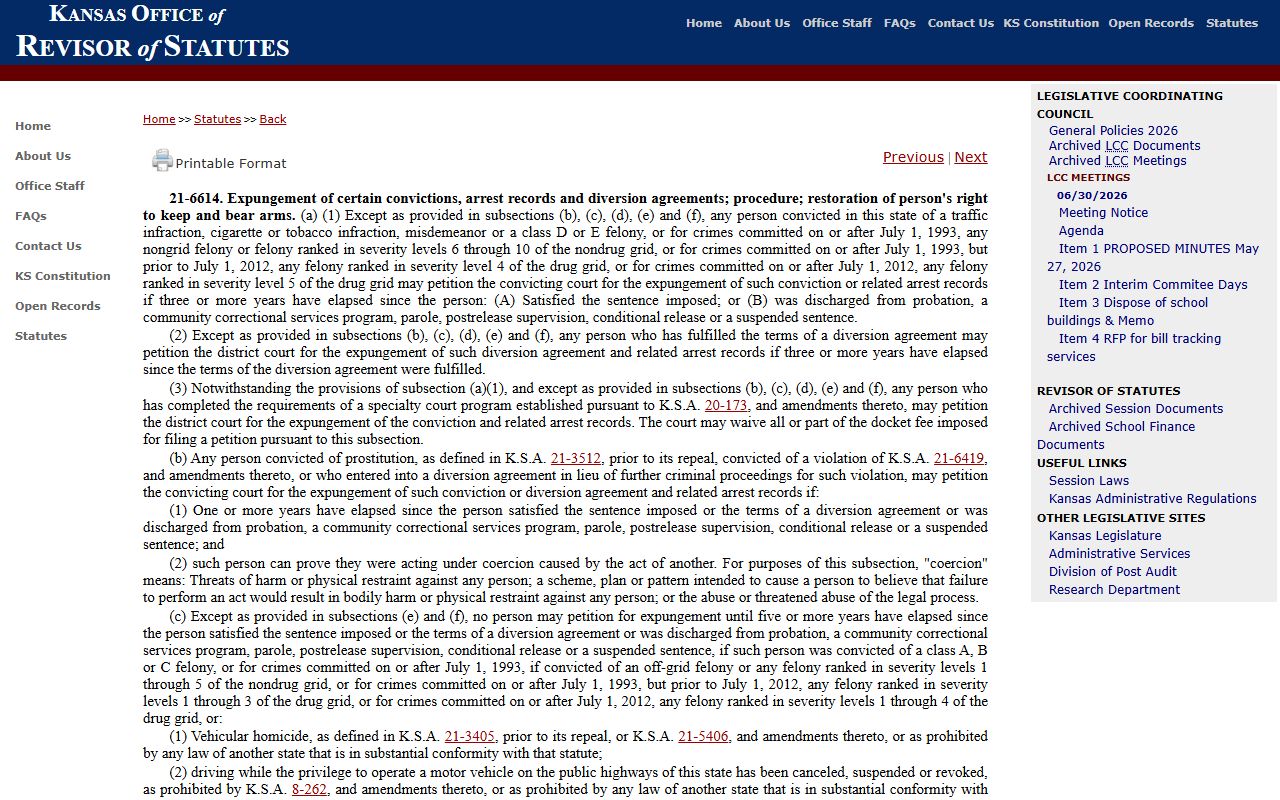
The expungement statute is the key adult criminal-record access limit for eligible Osborne County convictions, arrests, and diversions.
Access to Criminal Court Records
Public access to Osborne County criminal court records is shaped by Kansas CaseSearch, courthouse terminals, Kansas Supreme Court Rule 22, and open-records law. District Court criminal case files are requested through the Clerk of the District Court when the record is not available online or when a certified copy is needed. Plain copies, certified copies, and mailing can carry fees. Broad or staff-intensive requests may require an estimate or advance payment.
Restricted categories include sealed cases, expunged records, juvenile records, protected personal identifiers, and sensitive information removed by law or court order. K.S.A. 38-2309 limits access to many juvenile records. Kansas Chapter 45 open-records statutes apply to county-agency records outside the court file, while court rules control the public electronic case system.
Note: A dismissed charge can still appear in a public criminal case history unless it is sealed, expunged, or otherwise restricted.
Custody and Federal Records
Criminal court records can connect to custody records, but they are separate systems. Osborne County Sheriff records and jail information address local custody. Kansas VINE can help with participating custody notifications. KASPER is for sentenced Kansas Department of Corrections residents and people under KDOC supervision. A person may have a court case but no current jail custody, or custody may have moved from Osborne County to state or federal control.
Federal criminal cases are not Osborne County District Court records. Federal records for Kansas use the U.S. District Court for the District of Kansas and PACER. Federal custody uses the Federal Bureau of Prisons inmate locator, not the county court clerk.
The BOP inmate locator is the federal custody source for people in federal prison.
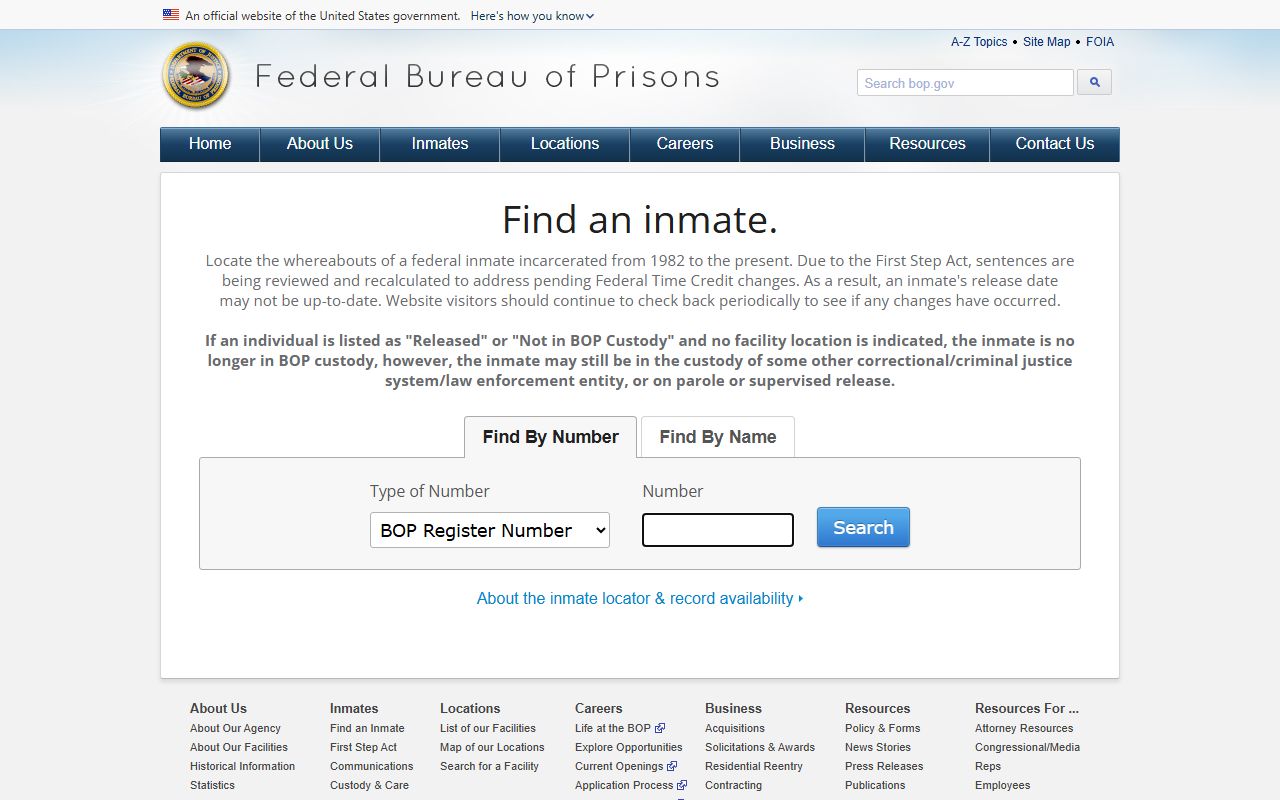
The federal locator is included only to separate federal custody from Osborne County criminal court case records.