
Osborne County Marriage License
Kansas marriage licenses are statewide online court applications through Kansas Self-Help, not a traditional Osborne County walk-in-only county clerk form. The Kansas Self-Help marriage page says the marriage license fee is $85.50 and also references a $2.14 fee. Kansas court news explains the statutory three-day waiting period, and the Self-Help page warns that processing can take up to two weeks from the application date. Local help can come from the Osborne County District Court or Clerk of the District Court when a local court contact is needed.
The marriage license process is tied to Kansas courts, so do not route license application questions to the sheriff or assume the elected Osborne County Clerk issues court marriage licenses. The District Court and Clerk of the District Court are at the Osborne County Courthouse, PO Box 160, Osborne, KS 67473, phone 785-346-5911. The office is the local court-record contact for divorce files and can help route marriage-license questions that require a court contact.
Apply for Osborne County Marriage License
Use the statewide Kansas Self-Help marriage license page to begin. The online process can be used from any location, but applicants should plan ahead because the waiting period and processing time can affect ceremony scheduling. If a local issue arises, the Osborne County District Court is the local court help channel identified by official sources.
- Start the online Kansas marriage license application through Kansas Self-Help.
- Enter identifying and contact information for both applicants.
- Pay the Kansas marriage license fee and any processing fee shown by the official page.
- Account for the three-day waiting period before processing begins.
- Wait for issuance; official guidance says processing can take up to two weeks from the application date.
- After the ceremony, make sure the completed license is returned or recorded as required by Kansas court and vital-record procedures.
Note: Ceremony timing should allow for both the statutory waiting period and the court's stated processing window.
Osborne County Marriage Application Fields
The exact online form fields were not fully inspectable in the accessible source, so the inventory below is limited to official process details. The application requires identifying information for both parties, contact information for processing, fee payment, acknowledgement of the waiting period, and post-issuance completion after the ceremony.
| Field or Requirement | Type | Required | Notes |
|---|---|---|---|
| Applicant names | Text | Yes | The online application requires identifying information for both parties. |
| Contact information | Text, email, or phone | Yes | Used for processing and court communication. |
| Fee payment | Payment | Yes | $85.50 license fee plus the processing fee shown by Kansas Self-Help. |
| Waiting period acknowledgment | Process rule | Yes | Kansas has a three-day waiting period before processing begins. |
| Ceremony and officiant return | Post-issuance step | Yes | The completed license must be returned or recorded after the ceremony. |
Osborne County Marriage and Divorce Fees
The fee data comes from Kansas Self-Help and Kansas Judicial Branch court-record fee guidance. Marriage license fees are paid through the statewide marriage license process. Certified divorce decrees and court-file copies are requested through the court clerk using Kansas court-record copy and certification fees. Divorce filing fees can change by case type and filing posture, so use Kansas Self-Help fee guidance and confirm with the Osborne County District Court before filing.
| Item | Amount or Channel |
|---|---|
| Kansas marriage license | $85.50 |
| Marriage license processing fee | $2.14 referenced by Kansas Self-Help |
| Plain Kansas court record copy | 25 cents per page |
| Certified court document | $10 per document certified |
| Mailing first five pages | 50 cents |
| Mailing additional five-page increments | 25 cents each |
| Divorce filing | Confirm current district court filing fee through Kansas Self-Help or the clerk |
The source image for this fee section comes from Kansas Self-Help district court filing fees.
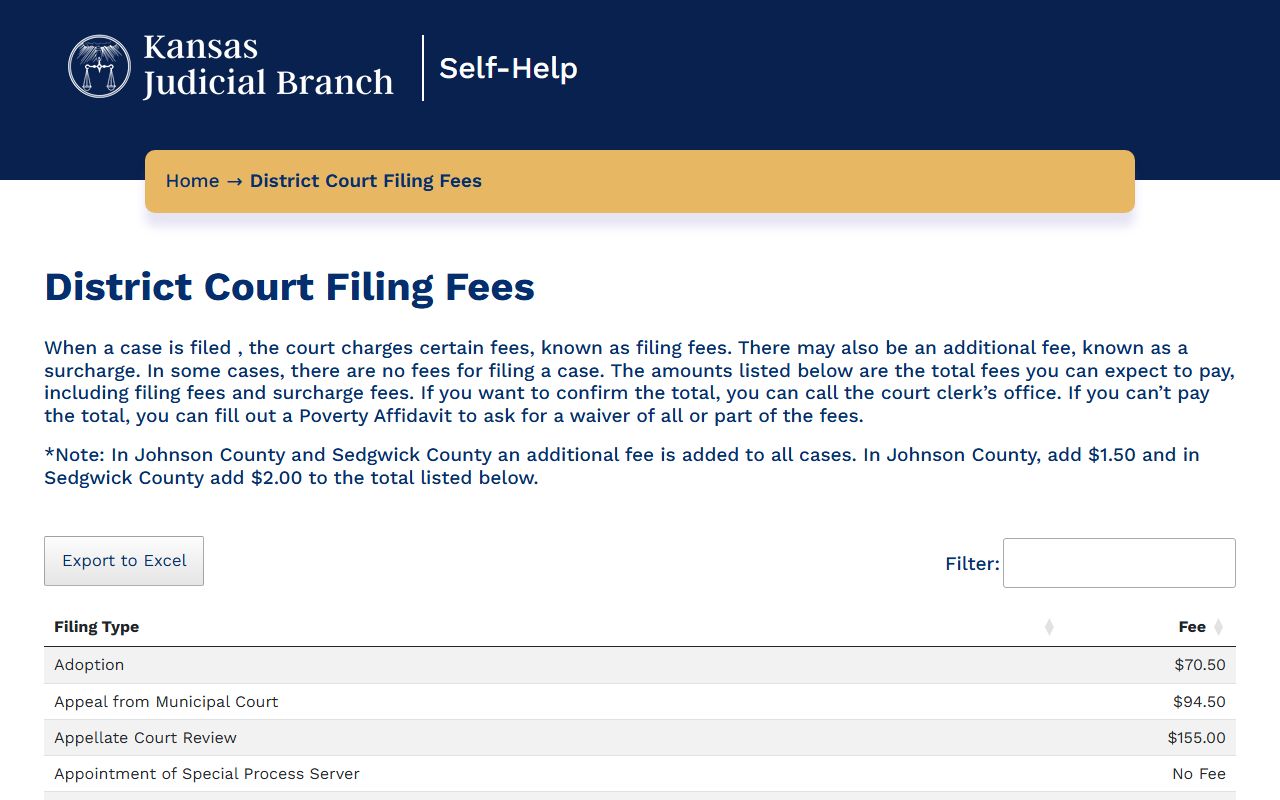
Use the fee page for filing-cost context, then confirm any Osborne County divorce filing amount with the Clerk of the District Court before submitting papers.
Find Osborne County Marriage Records
Marriage license application and issuance are handled through the Kansas courts online process, while certified copy instructions may depend on how the license was processed and recorded. Official county and court sources did not identify an Osborne County-only marriage record search portal. That means the best access path is to follow Kansas Self-Help instructions, keep the issued license details, and contact the court if a local processing question arises.
If the need is proof of marriage for a legal, benefits, name-change, or court purpose, ask for the certified record type required by the requesting agency. An uncertified screen print or informal note may not satisfy an agency that asks for a certified marriage record. For courthouse help, call the District Court at 785-346-5911 rather than the sheriff or municipal court.
Find Osborne County Divorce Records
Divorce cases are district court records. In Osborne County, divorce filing and record-copy questions go to the Clerk of the District Court, PO Box 160, Osborne, KS 67473, phone 785-346-5911. Public district court divorce case information may be searchable through Kansas CaseSearch when available under Kansas access rules, but sensitive domestic information can be restricted or require courthouse access. Certified copies of divorce decrees should be requested from the district court clerk.
A divorce file may include a petition, service papers, temporary orders, parenting or financial documents when children or support are involved, hearing entries, settlement terms, and the final decree. Not every document is public. Domestic cases can include protected addresses, minor information, financial information, or sealed materials. If CaseSearch does not show the document needed, call the clerk and ask whether the record is public, whether a courthouse terminal search is needed, and what copy fees apply.
Osborne County Divorce Filing
Kansas divorce filing generally begins with a petition in district court. The person filing pays the filing fee or asks for a fee waiver if eligible. The other spouse must be served. Temporary orders, parenting documents, support forms, property terms, and final orders may be needed depending on the case. Self-represented filers should use Kansas Self-Help forms and guidance, then confirm local filing requirements with the Osborne County District Court.
- Use Kansas Self-Help divorce forms or guidance if filing without a lawyer.
- File in Osborne County District Court if jurisdiction and residency requirements are met.
- Pay the district court filing fee or submit fee-waiver paperwork if unable to pay.
- Arrange service on the other spouse under court rules.
- Track hearings and orders through the clerk and CaseSearch when public entries are available.
- Request certified copies of the final decree from the Clerk of the District Court.
Certified Osborne County Divorce Decrees
A certified divorce decree is a court-certified copy of the final divorce order or decree. It is often needed for name changes, benefits, remarriage documentation, immigration, financial accounts, or enforcement. In Osborne County, certified divorce decree requests should go to the Clerk of the District Court. Kansas court-record fees are 25 cents per page, $10 per certified document, 50 cents to mail the first five pages, and 25 cents for each additional five-page increment. Staff time or other reasonable costs may apply when allowed by Kansas rules.
Ask the clerk what identifying details are needed before requesting a certified copy. A case number is best. Party names and approximate filing year can help if the case number is unknown. If the divorce record is older, archived, or not visible online, the clerk can say whether extra retrieval time or courthouse-terminal access is needed. Restricted domestic materials may not be released to the public even when the decree itself is available.
Restricted Osborne County Family Records
Marriage records are usually less restricted than divorce case files, but both can include information that is not suitable for broad public release. Divorce and domestic records may contain minor children's information, protected addresses, financial account details, medical or mental-health references, support information, or sealed exhibits. Kansas court access rules and privacy practices can limit what appears online or what a public requester can receive.
For public district court records, Kansas CaseSearch is the first online route, and courthouse terminals may provide access to public records not available online. For nonpublic or restricted material, a party, attorney, or person with a court order may need to follow a different process. The safest practical request is specific: name the case, ask for the decree or public docket, and let the clerk identify any limits before fees are paid.
Osborne County Record Channels
Marriage and divorce records use different access channels. The marriage application starts online through Kansas Self-Help. Divorce records are district court files. Certified court documents come from the Clerk of the District Court. Public case information may be visible through CaseSearch, while sensitive family materials may require clerk review or may not be public. That split is the key to avoiding the wrong office.
| Need | Best Channel |
|---|---|
| Apply for a marriage license | Kansas Self-Help online marriage license application |
| Marriage license processing help | Kansas Self-Help or Osborne County District Court |
| Search public divorce case information | Kansas CaseSearch when public and available |
| Certified divorce decree | Clerk of the District Court, 785-346-5911 |
| Divorce filing help | Kansas Self-Help forms and local District Court filing guidance |
| Restricted domestic material | Clerk review, party access, attorney access, or court order as applicable |